Weitere Infos
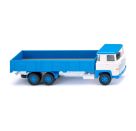
Genau in dieser weiß-himmelblauen Farbkombination warb Scania in den Siebzigerjahren für die Frontlenker-Generation der Typenreihe „110. Tatsächlich besaß die Hochbordpritsche eine verkäuferisch hohe Relevanz, weil Scania damit in den skandinavischen Kernmärkten punkten konnte. WIKING reagierte mit einem entsprechenden Fahrerhaus, das sehr bewusst die zweifarbige Gestaltung von Kabine und Dach vorsah. So wurde man der gestalterischen Vorbildpraxis gerecht. Die Traditionsmodellbauer setzten die Scania-Frontlenker-Generation in zahlreichen Kombinationen als Hängergespann und Sattelzug ein. Später half den Modellbauern, dass 1975 die neue Typenreihe „111 optisch lediglich nuancierten Facelift-Charakter besaß, so dass 1977 bei WIKING analog dazu die Typenaktualisierung Einzug hielt und für eine Modellvielfalt bis weit in die Achtzigerjahre sorgte.In the seventies, Scania used exactly this white-sky blue colour combination to promote the cab-over-engine generation of the 110 type series. In fact, the high-sided flatbed was highly relevant to sales as Scania managed to score high marks with this feature on their core markets in Scandinavia. WIKING responded with a corresponding driver’s cab, deliberately opting for the two-tone design of cab and roof. This allowed them to stay true to the design practice applied to the original. The traditional model makers used the Scania cab-over-engine generation to create a multitude of combinations in the form of tractor-trailer and road train models. Later, the model makers were helped by the fact that the new type series 111 released in 1975 was merely given a nuanced facelift, allowing them to follow suit with type updates starting in 1977 that guaranteed a wide variety of models far into the nineteen eighties.
Warnhinweis: Es liegen uns keine Warnhinweise des Herstellers/Lieferanten vor.